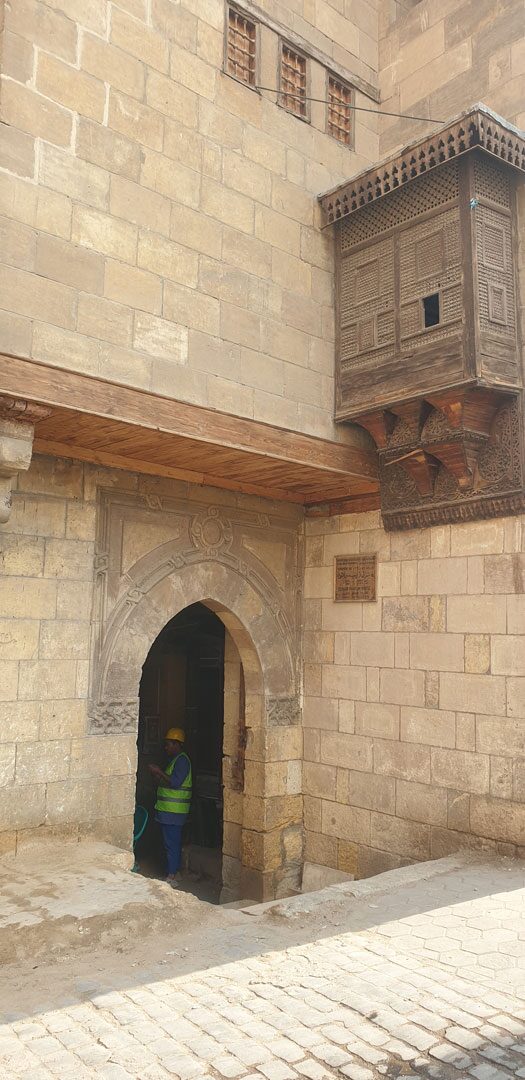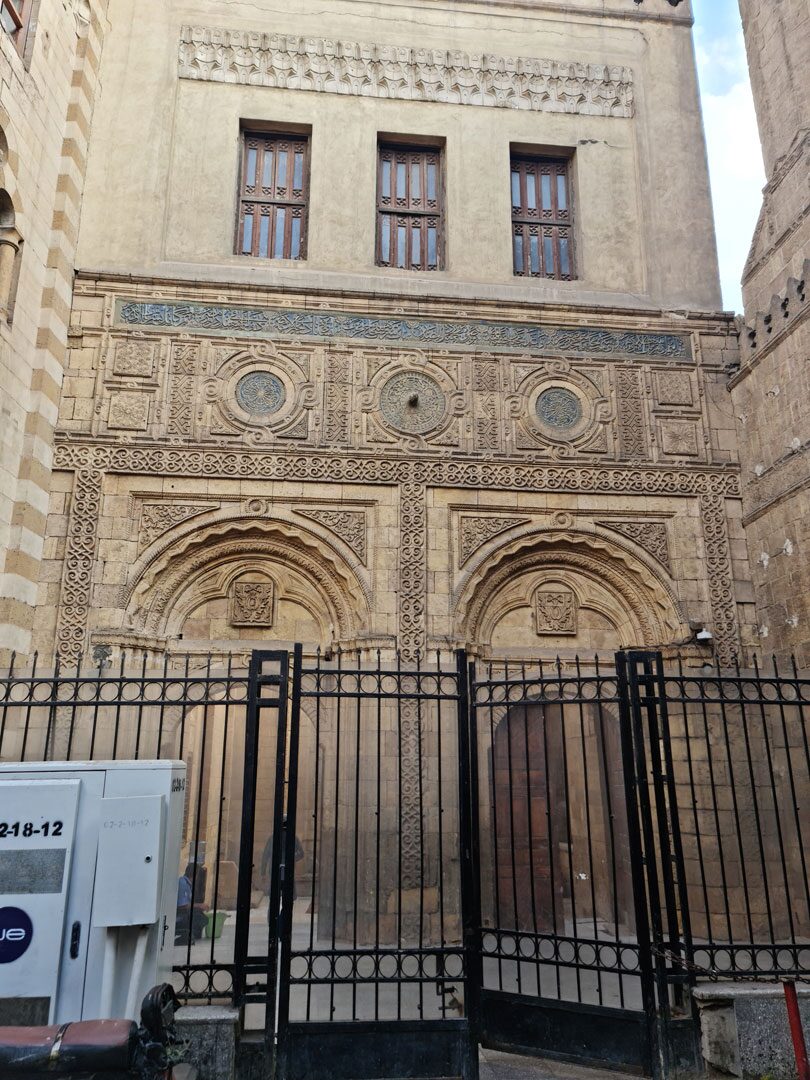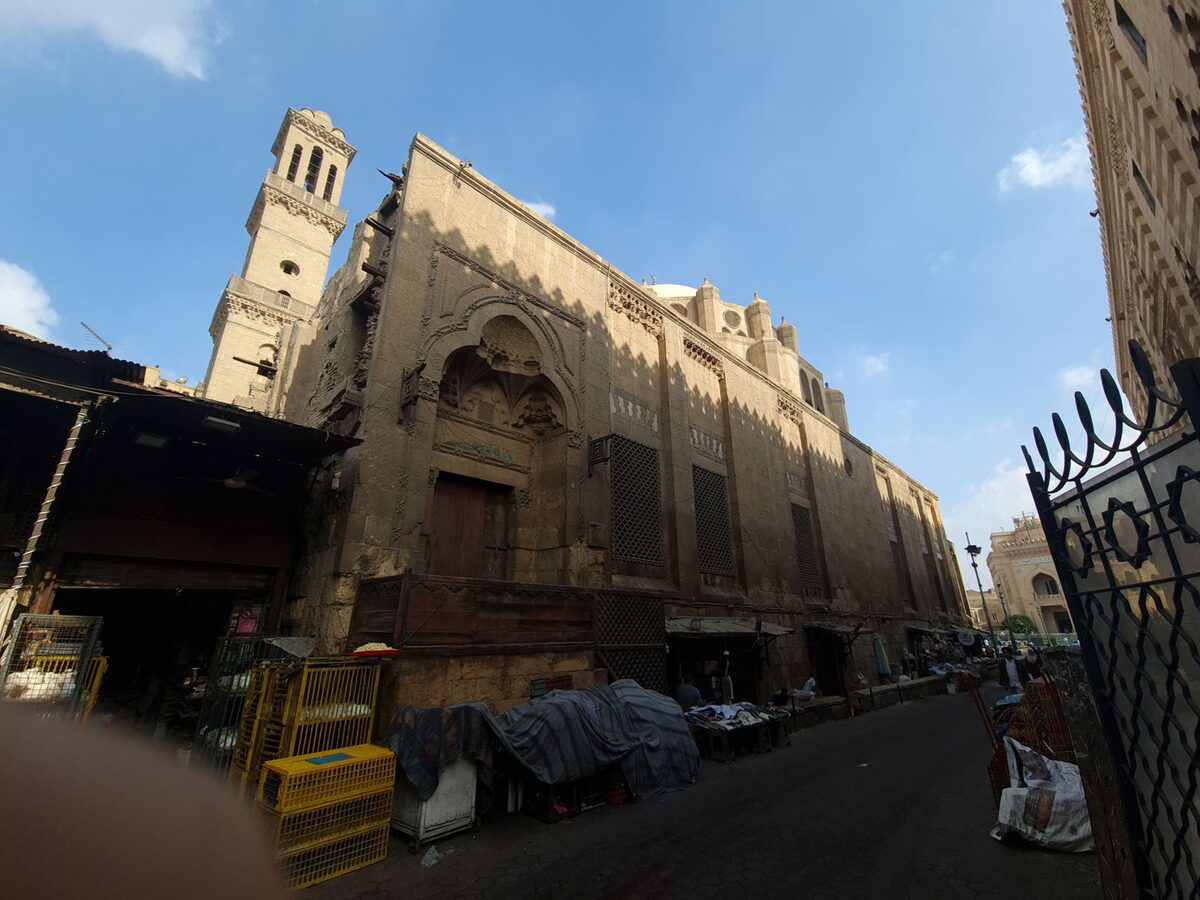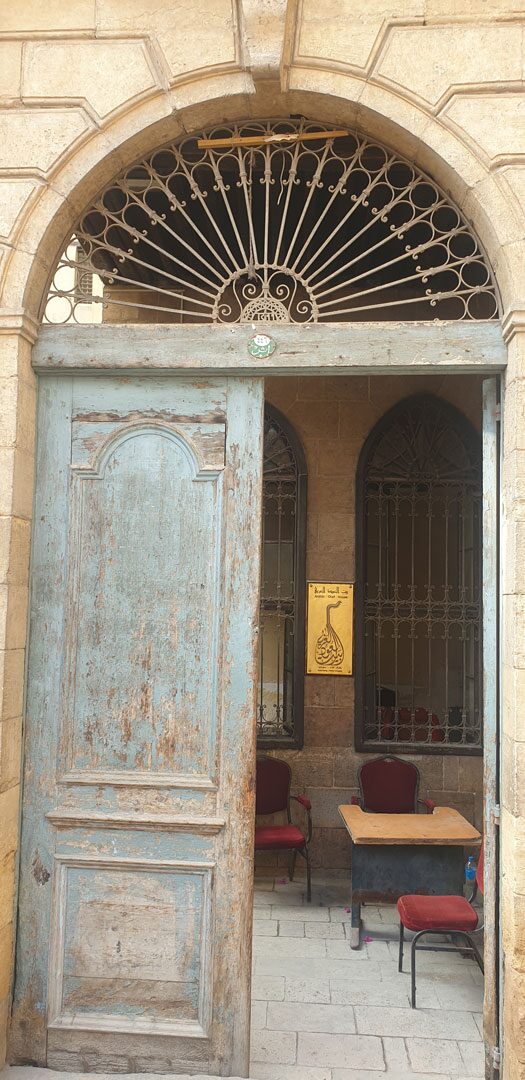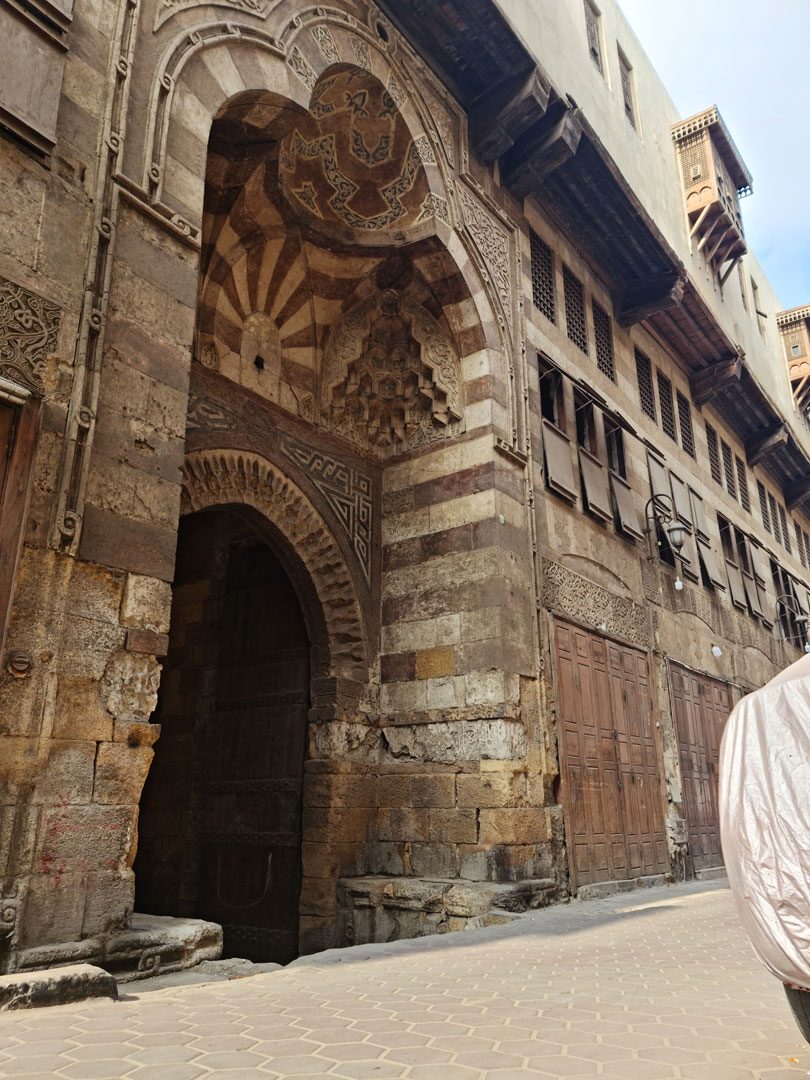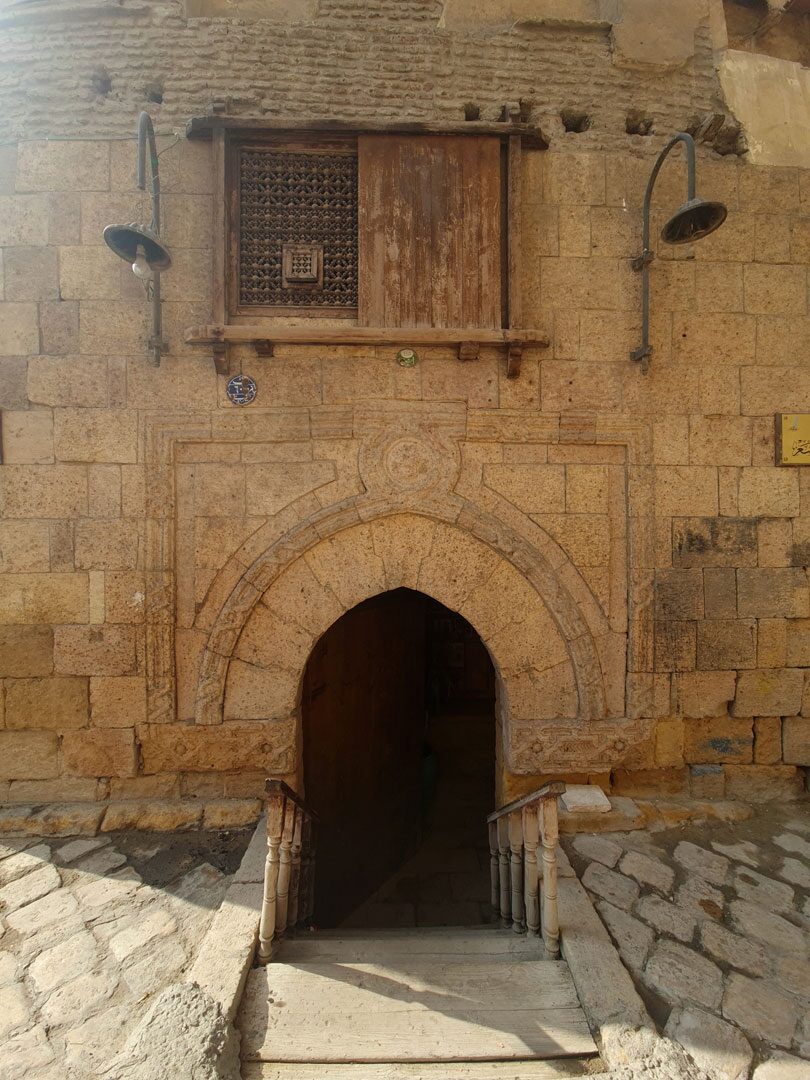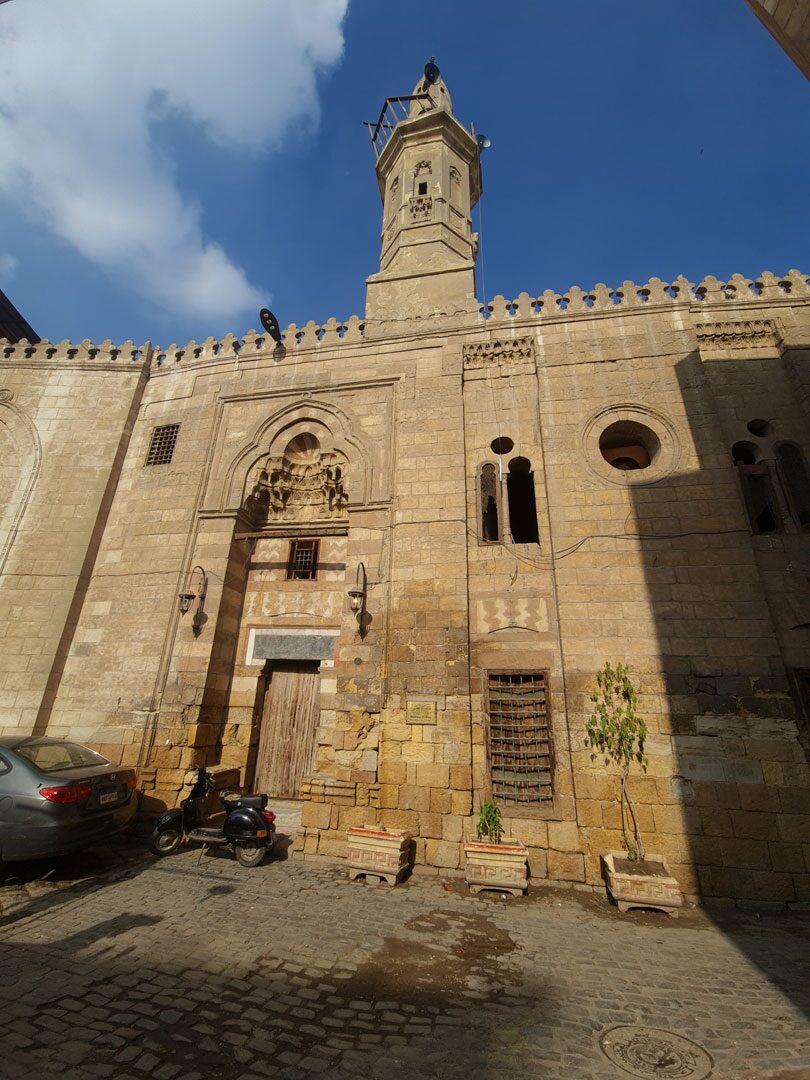
East of the Al Azhar Mosque are few important historical houses built between the 16th and 19th centuries, one of which is the Batinia House. Located in El Darb el-Ahmar, on Mohammed Abdou Street in the district of Al Batinia, which is one of Cairo’s most conspicuous neighborhoods. In the past, this area has been identified as Cairo’s main hub for the illegal drug trade.
Al Darb el Ahmar connects Salahdin Citadel and Al Azhar districts. It was designated for royal burials during the Fatimid dynasty (969–1171), but during the Mamluk dynasty (1250–1517), the city extended southward, and the area became a commercial and residential zone. In 1265CE/663H, a terrible fire broke out, leaving the region in ruins and uninhabited.
To redevelop the area, a home and four other mansions were built by Omar el Tawabshy Bahadur Al Nabhani Al Rumi, a Mamluk Sheikh of Al Azhar Mosque, to accommodate the four Sunni Sheikhs who were preaching at the mosque in 785 H/ 1384 CE. This encouraged commercial activities in the region, and Al Batinia, also known as Al Batlia, became a popular district.
The name “Al Batinia” according to Al Maqrizi, is associated with a clan, known as Al Batlia (wronged) that inhabited this region during the Fatimid dynasty. The name Al Batlia (the wronged) was eventually changed to Al Batinia (the learnt) during the Mamluk era. Al Batinia also emerged as a religious sect that promoted "Al Batin" the hidden truth, the essence of the holy scripture.